Destinations
eSIM for Croatia: what to know before you go
Inside the EU, on the euro, and covered by three networks. The only thing worth planning is how much data a coast holiday actually eats.
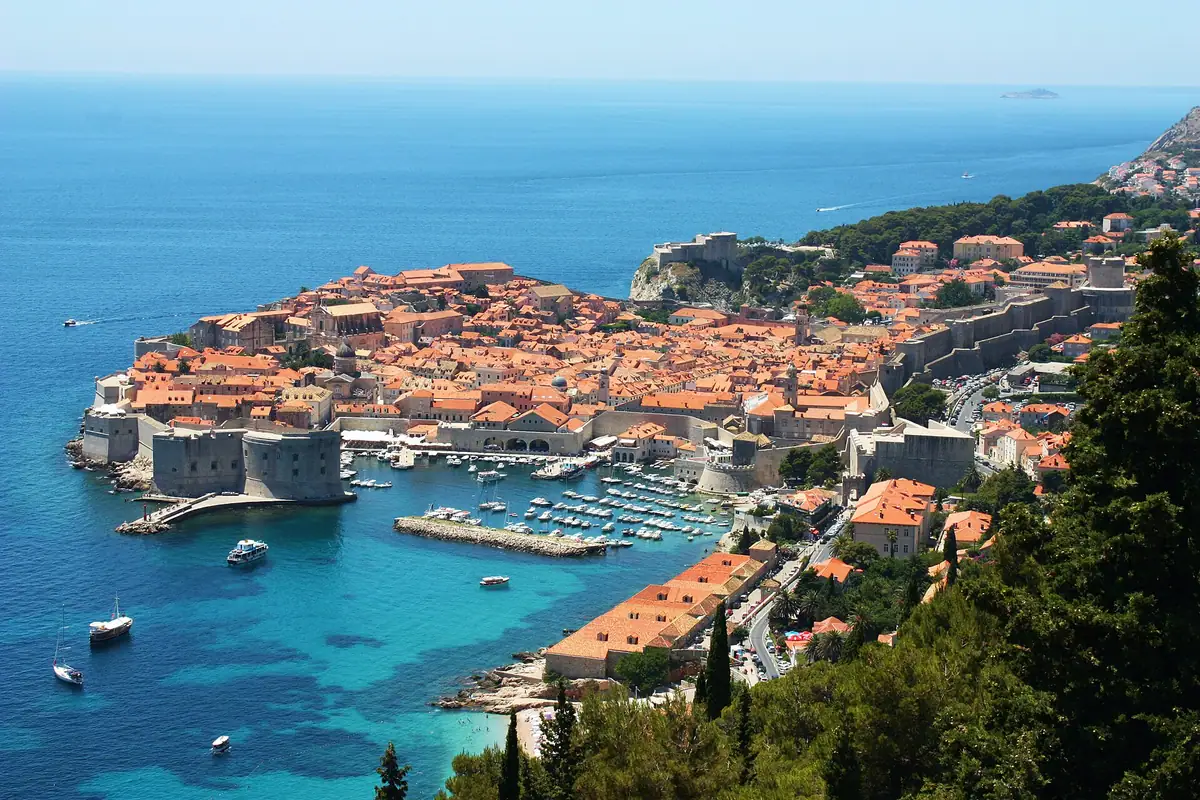
Photo: Bracodbk, CC BY-SA 3.0
Croatia is the easy case. It is in the EU, it uses the euro, and an eSIM there behaves exactly as it would at home — no registration, no paperwork, no shop.
Which networks you get
Our plans connect to A1, Hrvatski Telekom and Tele2. Your phone picks whichever is strongest where you are, which matters more on the coast than in Zagreb: island coverage varies by carrier, and having all three is the difference between a signal on a beach and none.
If you already have an EU plan
Then you may not need anything. Roam-like-at-home means your home plan costs what it costs at home anywhere in the union, Croatia included — but check your fair-use cap before you rely on it. Operators are allowed to limit data abroad, and the limit is usually far below your home allowance.
Outside the EU, that protection ends at the border — and Croatia has borders with Bosnia, Serbia and Montenegro that a coastal road crosses twice.
That last point catches people driving from Dubrovnik north. The road passes through Neum, which is Bosnia. Your phone will happily register on a Bosnian network and your EU plan will not cover it.
How much data
For a week of maps, messaging and photos, 3 to 5 GB is comfortable. Add more if you plan to work, or if you will be streaming on a ferry with nothing else to do.
Before you fly
Install at home on WiFi and leave data roaming switched off on the travel line until you land. The plan counts from the first connection, not from the purchase, so a line that connects while you are still at home is spending days you paid for.