Destinations
Day trips from Rome: twelve that fit in a day
Rome takes a week and most people have four days. Twelve places within reach of a morning train — with the fares, the walking, and the one thing about each that decides whether it is worth your only free day.
Rome is the rare capital where leaving feels like a waste. There is always another church, another piazza, another thing you did not know was around the corner. The city earns the whole week.
But Lazio and its neighbours are not scenery you pass on the way in. An hour on a regional train puts you in a hill town with an Etruscan necropolis under it, or a Roman port frozen mid-sentence, or a cathedral façade so overworked it looks like jewellery. Two hours and you are in Pompeii, or Florence, or on a beach.
What follows is the list, ordered by distance. The numbers are at the top of each so you can plan around the last train home, which is the thing that actually constrains a day trip.
1. Ostia Antica
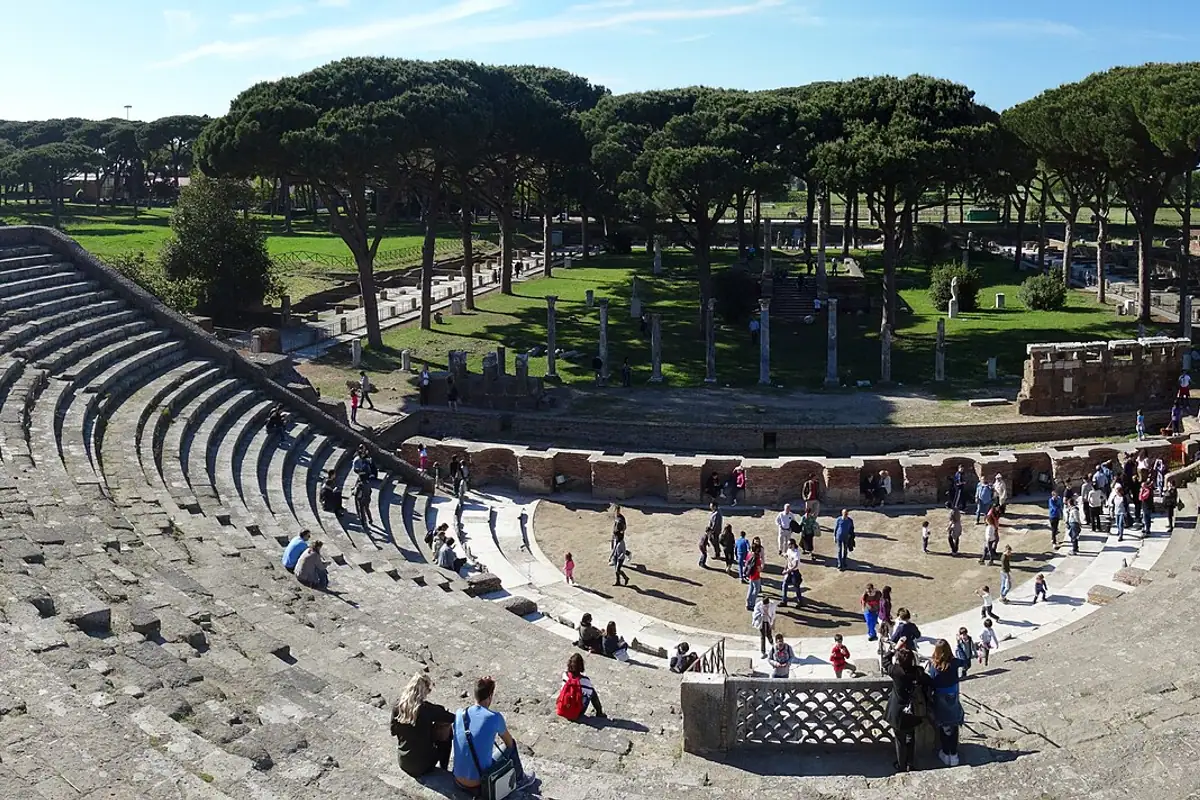
Pompeii without the coach parks, and inside the city's own transport network. This was Rome's port, the place that fed a million people, and it was abandoned slowly rather than buried suddenly — so what survives is a working town: warehouses, a fire station, bars with the marble counters still in place, and public toilets built as a row of twenty seats with no partitions.
The mosaics in the Baths of Neptune are as good as anything in a museum, and they are outdoors, under your feet, free of glass.
- The theatre, and the square of the guilds behind it, each with its trade in mosaic
- The Thermopolium — a bar, counter and all
- The Baths of Neptune mosaics
- The communal latrines, which every visitor photographs and nobody admits to
Worth knowing. It is bigger than it looks and there is little shade. Take water; the site has fountains but they are far apart.
2. Tivoli
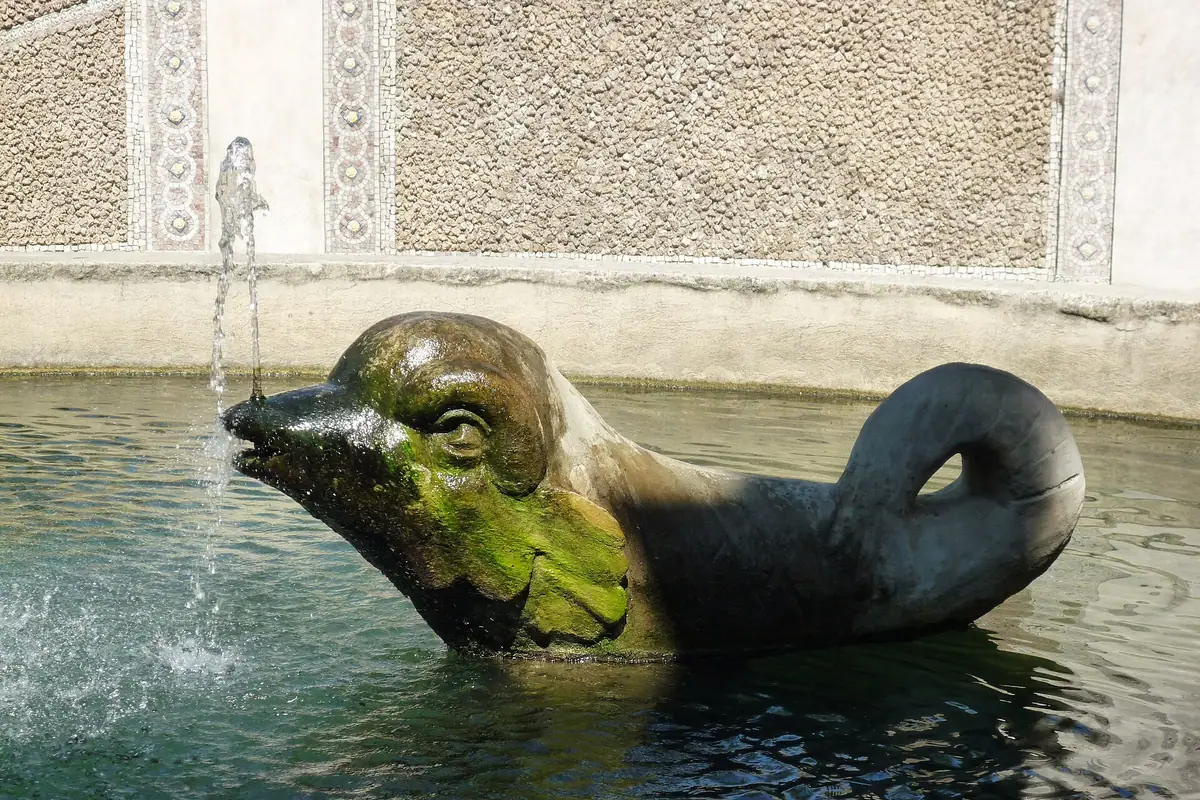
Two villas, sixteen centuries apart, twenty minutes from each other. Villa d'Este is a Renaissance cardinal's garden built on the idea that water should never stop moving: five hundred fountains, an organ that plays itself on water pressure, and not one pump in the whole system. It is all gravity, and it has worked since 1572.
Hadrian's Villa, below the town, is not a villa but an emperor's private city — a hundred and twenty hectares of pools, libraries, baths and guest quarters, most of it still unexcavated.
- The Avenue of a Hundred Fountains at Villa d'Este
- The Fountain of the Organ, which plays on the hour
- The Canopus at Hadrian's Villa — a long pool lined with caryatids
- The Maritime Theatre, a circular island villa inside the villa
Worth knowing. Doing both in one day means a bus between them and a lot of walking. If you only want one: d'Este for the spectacle, Hadrian's for the scale.
3. Castelli Romani
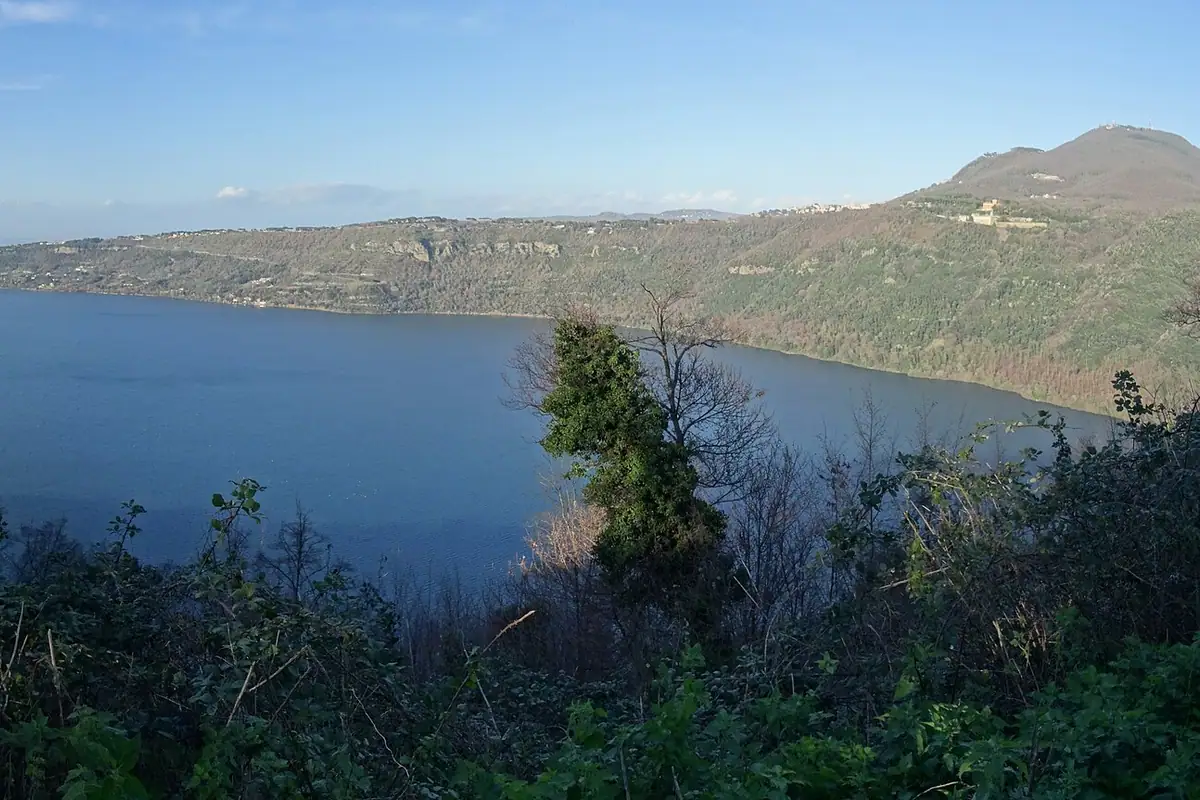
The hills where Romans have gone to escape Rome since Romans existed. A dozen small towns around two crater lakes, each with a piazza, a view back over the city, and more wine than is sensible for a Tuesday.
Frascati is the easiest — half an hour from Termini and straight into the old centre. Castel Gandolfo, on the rim above Lake Albano, was the papal summer residence until 2016, and the gardens are now open to anyone.
- Frascati, for the fraschette — cellars where you bring your own food and buy the wine
- Castel Gandolfo and the Barberini Gardens
- Lake Nemi, smaller and quieter, famous for wild strawberries
- The view over Rome from Rocca di Papa on a clear day
Worth knowing. This is the trip for a day when you do not want to look at anything in particular. It is lunch and a view, and that is the point.
4. Cerveteri
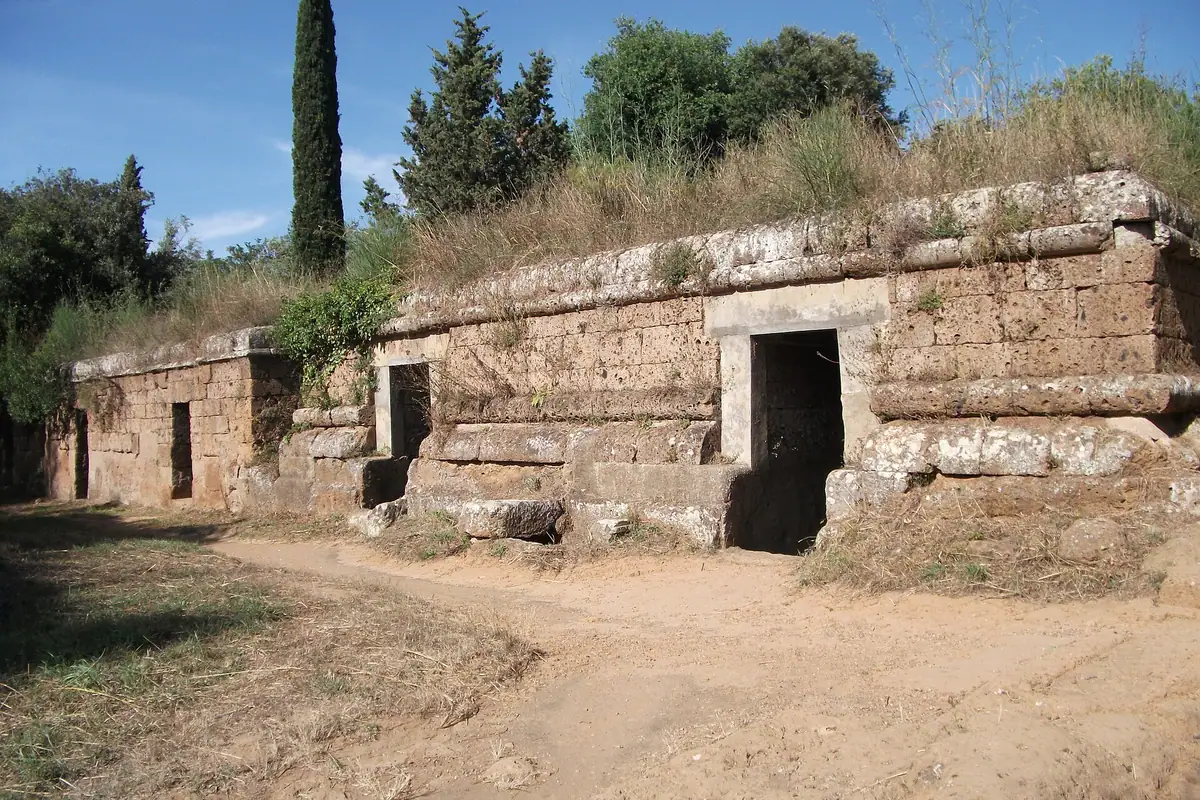
The Etruscans were here before Rome was anything, and Cerveteri is where they buried their dead — in a necropolis laid out as an actual city, with streets, squares and house-shaped tombs you walk into.
Inside, the tombs are carved to look like homes: beds, chairs, roof beams, all cut from the rock. The Tomb of the Reliefs has kitchen utensils and weapons modelled on the walls in stucco, so you can see what an Etruscan house held.
- The Tomb of the Reliefs
- The great tumuli, twenty and thirty metres across
- The Via degli Inferi, the sunken road between the tombs
- The town museum, for what came out of them
Worth knowing. It is a UNESCO site and almost empty most days. If Rome has worn you out with crowds, this is the antidote.
5. Bracciano
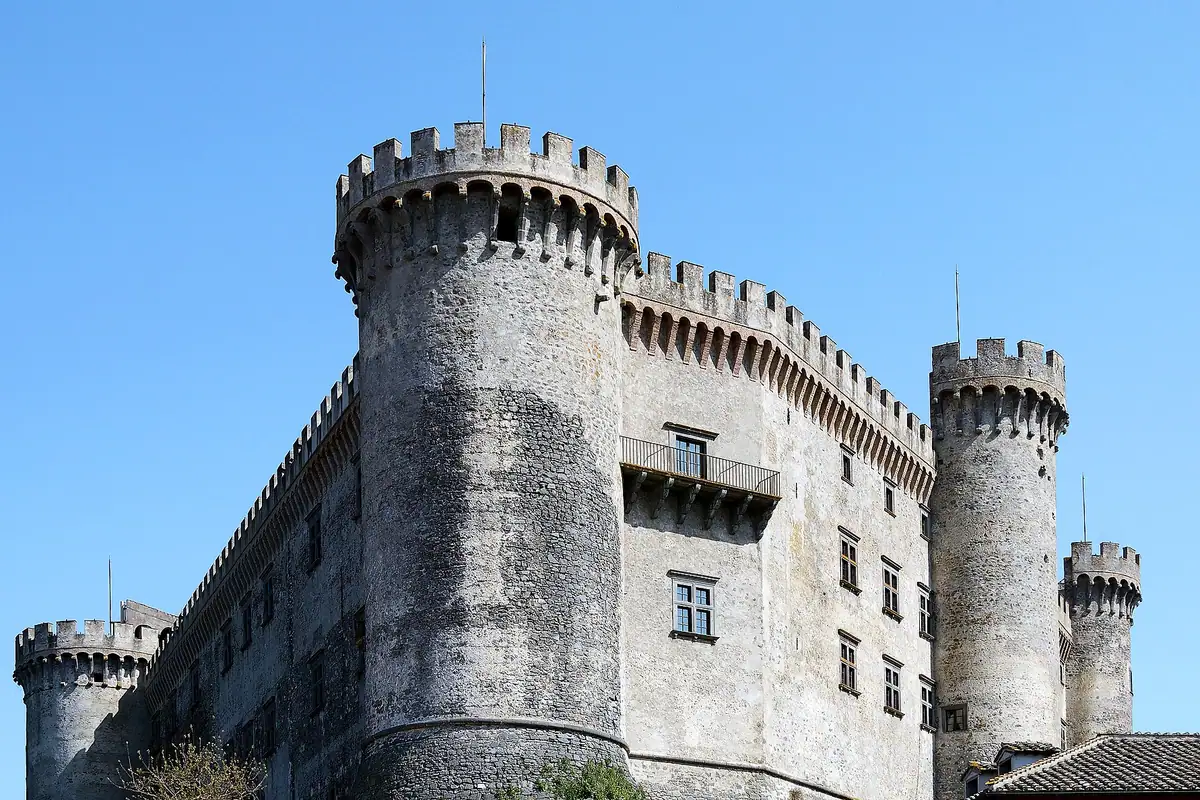
A fifteenth-century castle on a volcanic lake, and one of the better-preserved private fortresses in Italy — still owned by the family, still furnished, and rented out for weddings that make the papers.
The lake is a drinking-water reservoir for Rome, which means no motorboats and water clean enough to swim in. In July that combination is worth the train on its own.
- The castle, and the walk round the ramparts
- Swimming at Lungolago Argenti, ten minutes below the town
- Anguillara Sabazia, the prettier village on the far shore
- Trevignano, for lunch facing the water
Worth knowing. Combine castle and swim: the castle takes ninety minutes and the afternoon belongs to the lake.
6. Viterbo
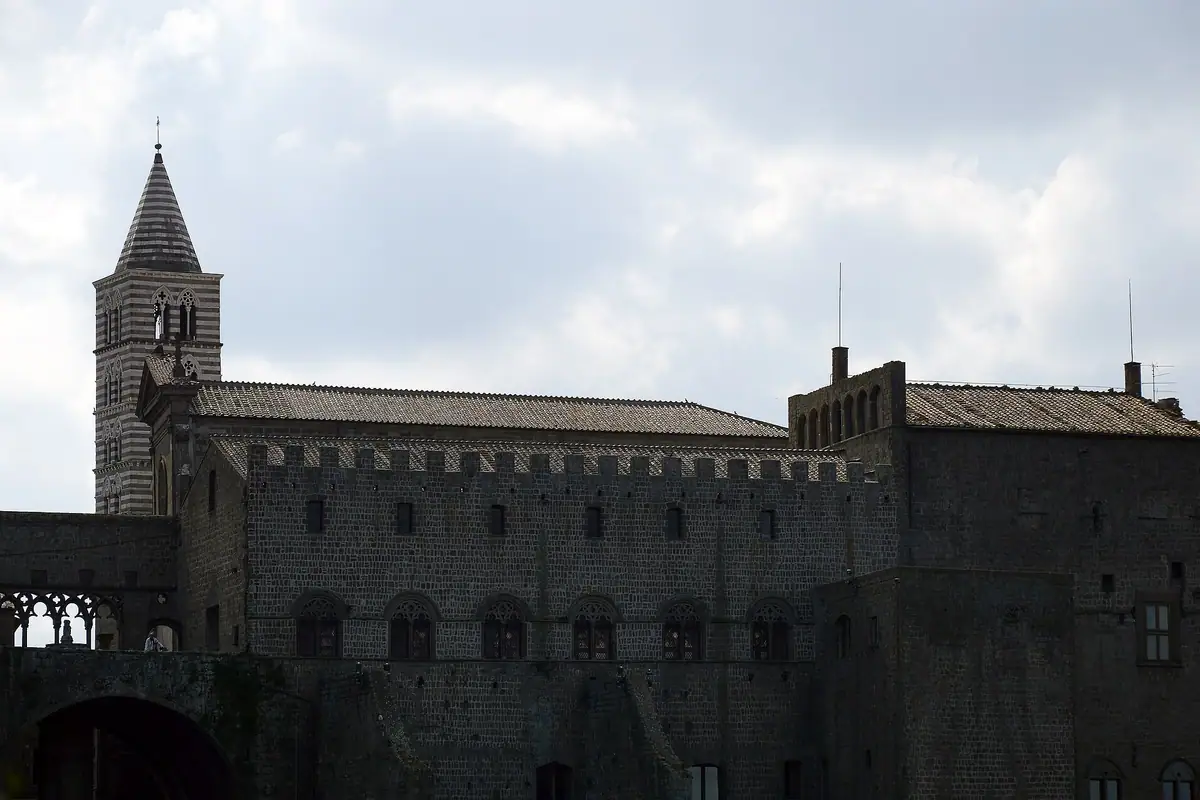
For twenty-four years in the thirteenth century the popes lived here rather than in Rome, and the town has the buildings to prove it. The medieval quarter of San Pellegrino is the largest intact one in Europe — covered passages, external staircases, nothing restored into a film set.
The Palazzo dei Papi is where the word conclave comes from: in 1268 the cardinals took nearly three years to choose a pope, so the townspeople locked them in, cut their rations, and finally removed the roof. They chose in a fortnight.
- The San Pellegrino quarter
- The Palazzo dei Papi and its loggia
- The thermal springs at Bagnaccio, free and open air, just outside town
- Villa Lante at Bagnaia, ten minutes away — one of Italy's great gardens
Worth knowing. Viterbo and Villa Lante together make the day. The springs are best in winter, when steam sits over the water.
7. Civita di Bagnoregio
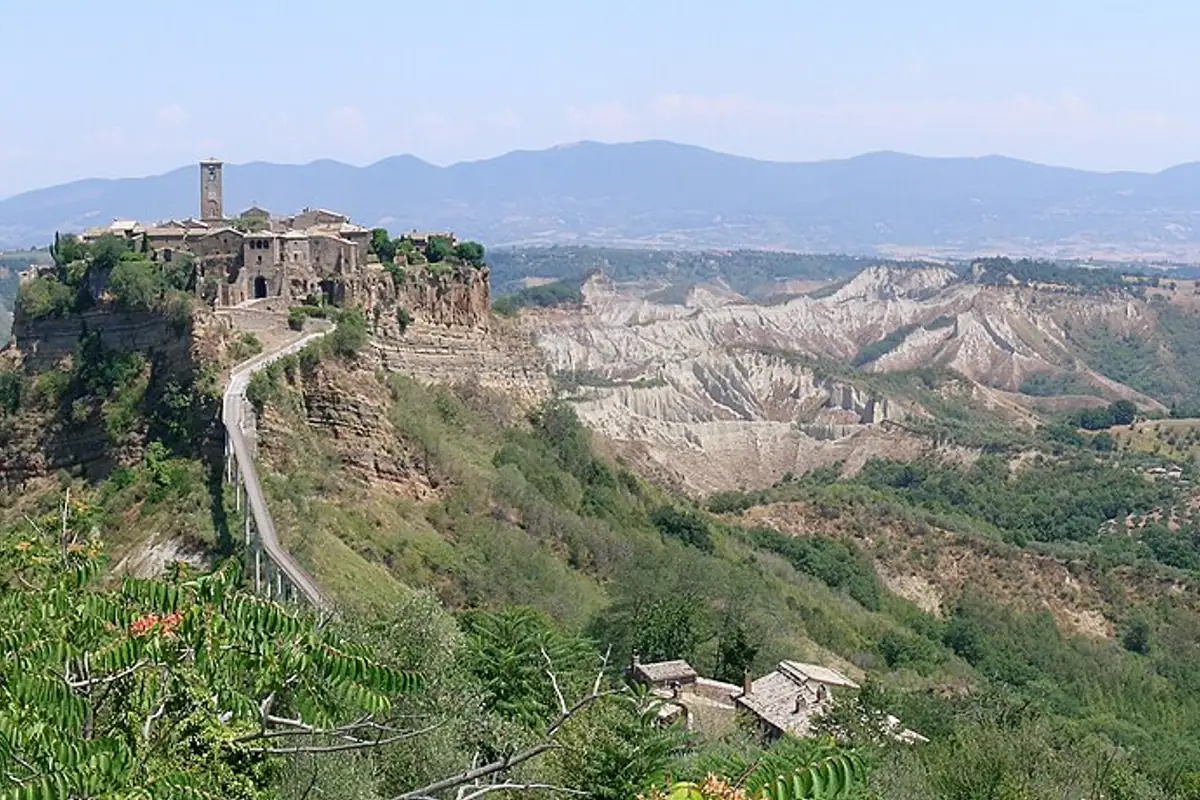
A town on a pillar of tufa that is slowly falling away beneath it. The valley around it erodes a little every year, and Civita is left standing on a plug of rock reached by a single footbridge — the only way in, on foot, for everyone including the people who live there.
Somewhere between eight and sixteen people live there year-round, depending on the season and who is counting. It takes twenty minutes to walk the whole place, and that is fine; you came for the approach.
- The bridge, and the view of the town from it
- The Romanesque church of San Donato on the piazza
- The Etruscan tunnel cut straight through the rock beneath the town
Worth knowing. Pair it with Orvieto — you change there anyway, and the two together are a good long day.
8. Orvieto
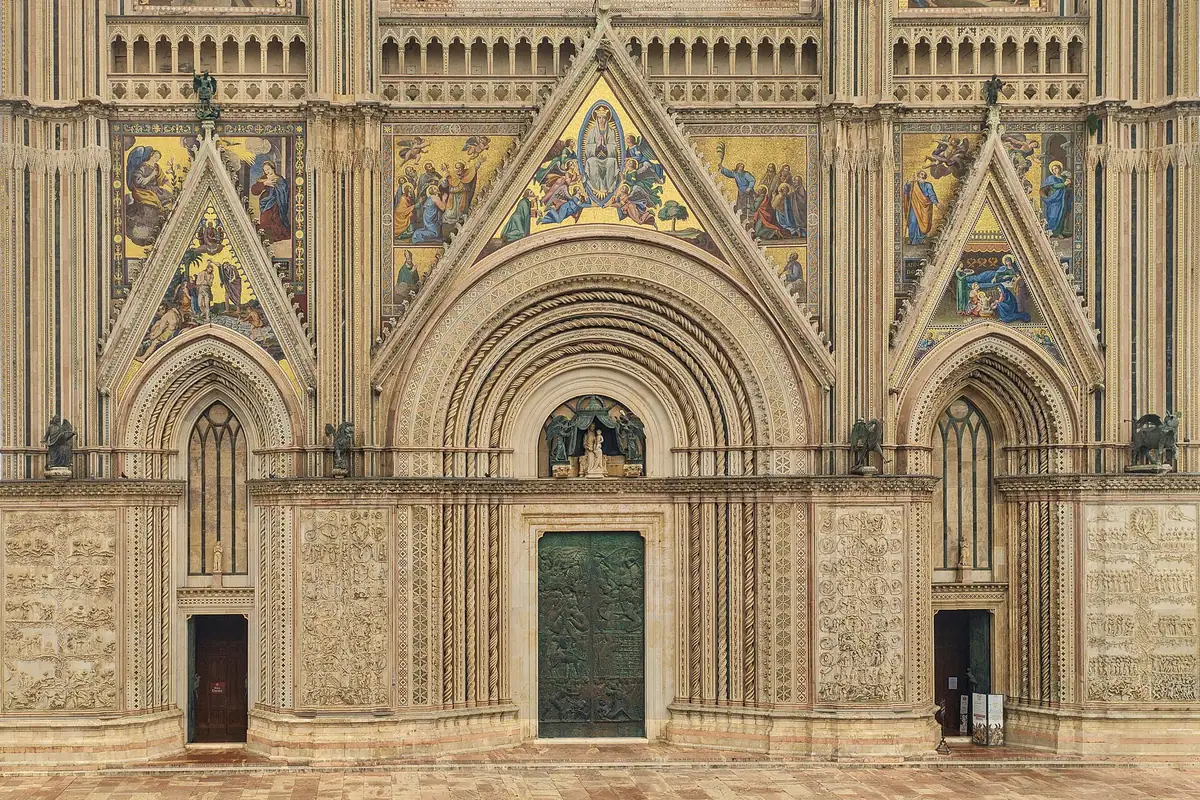
A town on a flat slab of volcanic rock with cliffs on every side, and on top of it one of the most worked-over cathedral façades in Italy — three centuries of mosaic, marble and carved relief, best seen in late afternoon when the gold catches.
Under the town is another town: two and a half thousand years of cellars, wells, quarries and pigeon lofts cut into the tufa, on a guided tour that takes an hour.
- The Duomo façade, and the Chapel of San Brizio inside it
- Orvieto Underground
- St Patrick's Well — a double-helix staircase so mules could go down and up without meeting
- The funicular up from the station, which is part of the fun
Worth knowing. This is the easiest long-distance trip on the list: one direct train, no changes, and the funicular meets it.
9. Sperlonga
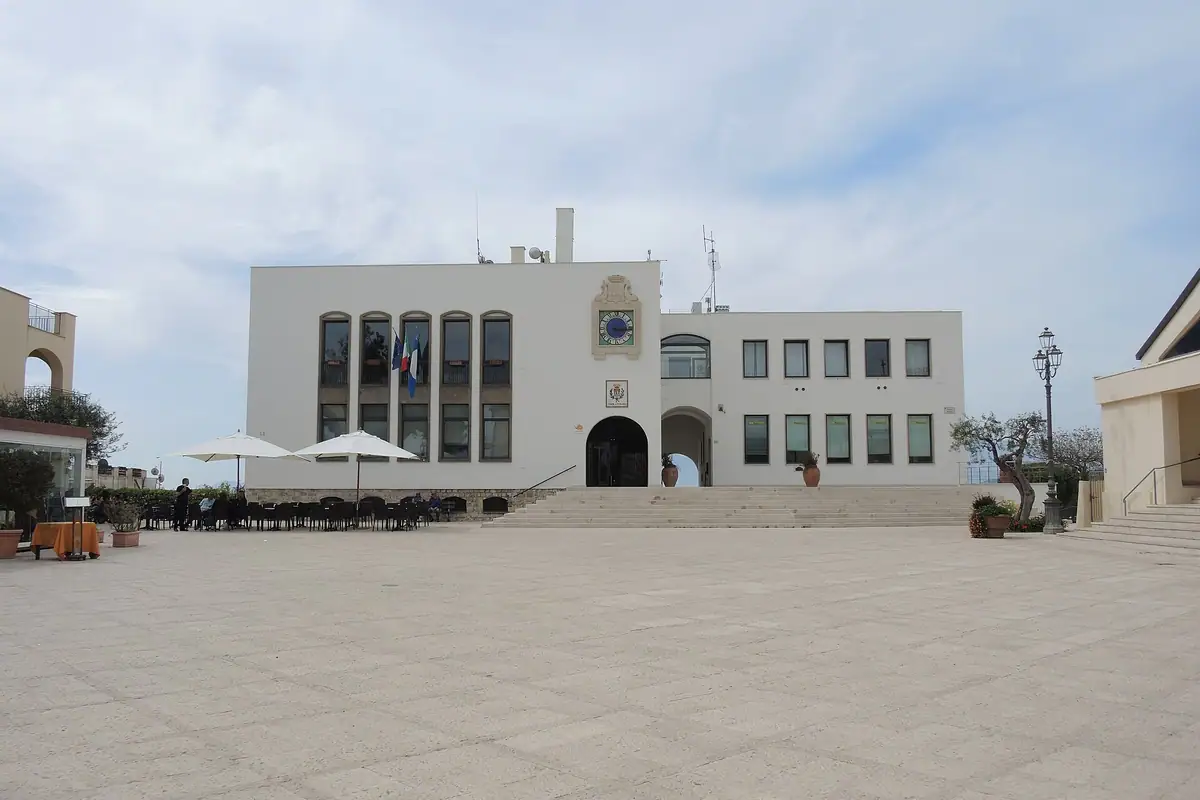
The closest genuinely good beach to Rome, and a white hill town above it that looks more Greek than Italian — whitewashed, stepped, car-free in the old centre.
At the end of the beach is the emperor Tiberius's seaside villa, built around a natural cave he used as a dining room. The sculptures found in it, smashed into thousands of pieces and reassembled, are in the museum on site.
- The old town, and the steps down to the sea
- The Villa of Tiberius and its grotto
- The museum, for the Scylla and Polyphemus groups
- The beach either side of the headland — the north one is quieter
Worth knowing. In August the whole of Rome has the same idea. June and September are the same water with a tenth of the people.
10. Pompeii
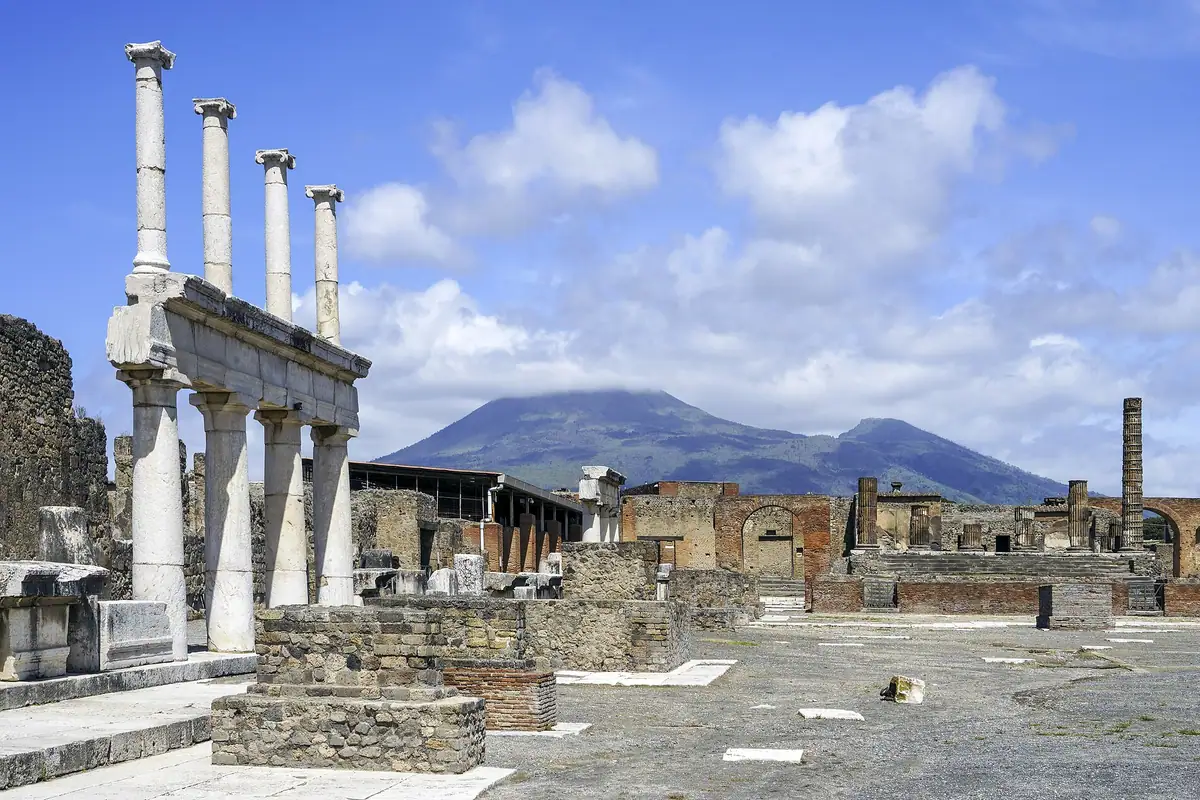
It is far, it is the most visited archaeological site in Europe, and it is still worth the day. Nothing else gives you a whole Roman town at once — streets with kerbs and stepping stones, shops with their signs, houses with their gardens replanted from the seeds found in the soil.
The mistake is trying to see all of it. Sixty-six hectares is a full day at a march. Pick a quarter, walk it slowly, and let the rest go.
- The Forum, with Vesuvius framed behind it
- The House of the Faun and the House of the Vettii
- The Villa of the Mysteries, out beyond the walls and usually empty
- The amphitheatre, the oldest surviving one anywhere
Worth knowing. Book the entry slot ahead. And take the Circumvesuviana to Pompei Scavi, not Pompei — the second is the modern town, twenty minutes' walk away.
11. Assisi
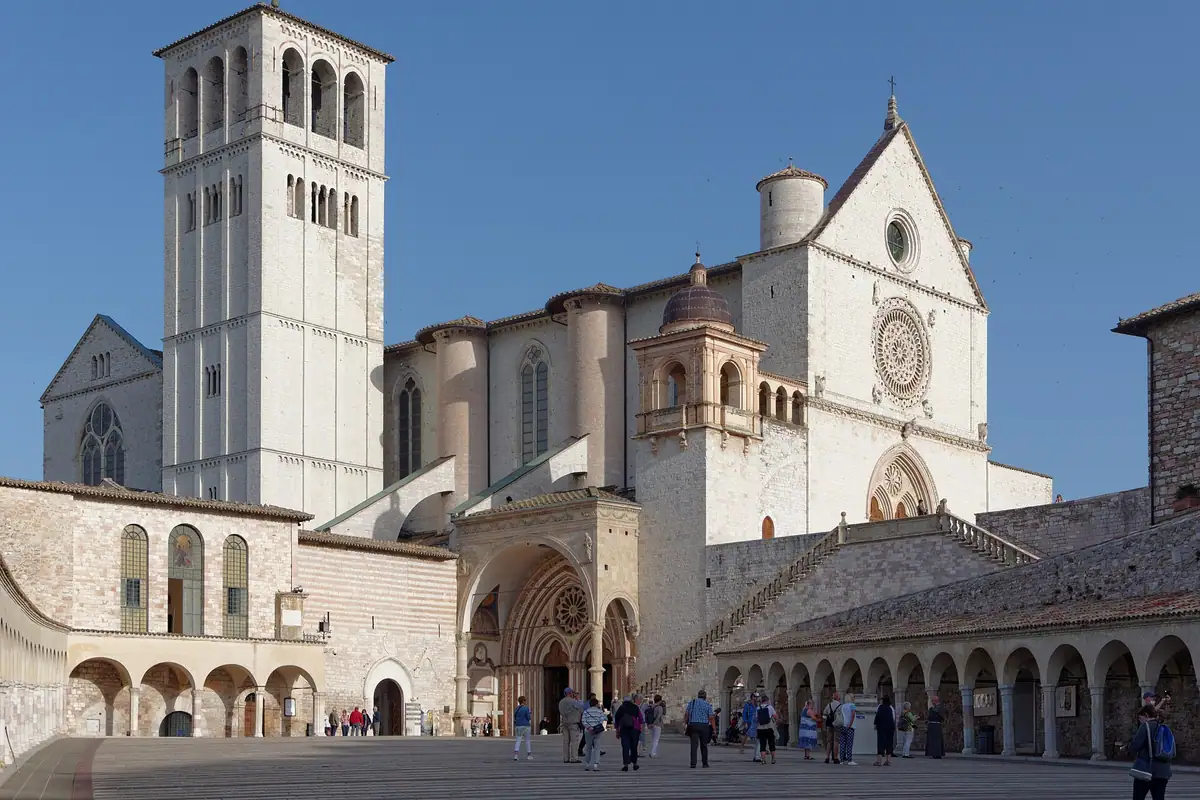
A pink stone town on the side of Monte Subasio, and the reason it is full is Giotto. The Basilica of San Francesco is two churches stacked on each other, and the upper one carries the twenty-eight fresco panels of the life of St Francis that mark the moment European painting started looking like the world.
No photographs are allowed inside and the rule is enforced, which has the accidental effect of making people look at the paintings.
- The Upper Basilica and the Giotto cycle
- The Lower Basilica, darker and older, with Cimabue and Lorenzetti
- The Temple of Minerva on the main square — a Roman façade, still standing
- The Rocca Maggiore above town, for the valley
Worth knowing. The station is at Santa Maria degli Angeli, four kilometres below the town. There is a bus every half hour; do not plan to walk it.
12. Florence
Ninety minutes on the fast train, which makes Florence closer in time than Sperlonga. It is absurd to see it in a day and people do it anyway, and if you book one museum and walk the rest it is not even a bad day.
The trick is choosing. Uffizi or Accademia, not both. Duomo climb or Palazzo Vecchio tower, not both. One thing booked, everything else on foot.
- The Duomo, Baptistery and Giotto's campanile, from the outside at least
- One of: the Uffizi, the Accademia, the Bargello
- Ponte Vecchio and the walk up to Piazzale Michelangelo for the view
- The Oltrarno, where the city still works for a living
Worth knowing. Book the museum slot weeks ahead, and buy the train ticket ahead too — the fast trains are cheap early and dear on the day.
How to choose, if you only get one
A rough sorting, assuming one free day:
- If you have half a day, not a whole one: Ostia Antica. It is inside the metro network.
- If you want the photograph: Civita di Bagnoregio, or Orvieto's façade in late light.
- If Rome's crowds have beaten you: Cerveteri. You may have it to yourself.
- If it is thirty-eight degrees: Bracciano or Sperlonga. There is water in both.
- If you will never be back: Pompeii. Nothing else on the list is unrepeatable in the same way.
Practical things worth doing before you go
- Validate the regional ticket. Regional trains need the paper ticket stamped in the green machine before boarding. Fast trains do not. The fine does not care that you did not know.
- Check which station. Rome has Termini, Tiburtina and Ostiense, and the right one differs by destination. Tivoli and Viterbo leave from the ones people forget.
- Sort out data before you land. Bus times in Lazio change without warning and live only online. An EU SIM roams in Italy at no extra cost; everything else does not.
Rome rewards a week. These reward the day you were going to spend queueing for something you have already seen in photographs.
The best of them start early. The first train to Orvieto gets you there before the coaches; the first bus to Tivoli gets you the Avenue of a Hundred Fountains with nobody in it. None of that takes anything except being willing to get up.
Italy — our plans
6 plans · prepaid · activate any time within 12 months
| Plan | Valid | Price |
|---|---|---|
| 1 GB | 7 days | €1.25 |
| 3 GB | 30 days | €2.76 |
| 5 GBmost chosen | 30 days | €3.99 |
| 10 GB | 30 days | €6.72 |
| 20 GB | 30 days | €11.51 |
| 50 GB | 90 days | €27.18 |