Destinations
Day trips from Athens: twelve worth the early start
Athens is a good base and a poor excuse to stay put. Twelve places you can reach and return from in a day — with the travel times, the fares, and the one thing about each that nobody tells you until you are already there.
Most people give Athens two days, see the Acropolis, and leave with the feeling that they have done Greece. They have done about four square kilometres of it.
What makes Athens worth more time is that it sits at the centre of a wheel. Ninety minutes in almost any direction and you are somewhere completely unlike the city: a temple on a cliff over the sea, a theatre where a coin dropped on stage is audible in the back row, an island with no cars on it. All of it is doable between breakfast and dinner if you know which bus, which ferry, and — the part that catches people out — what time the last one comes back.
This is the list, ordered roughly by how far you go. Each one has the numbers up front so you can plan around the clock rather than the map.
1. Cape Sounion
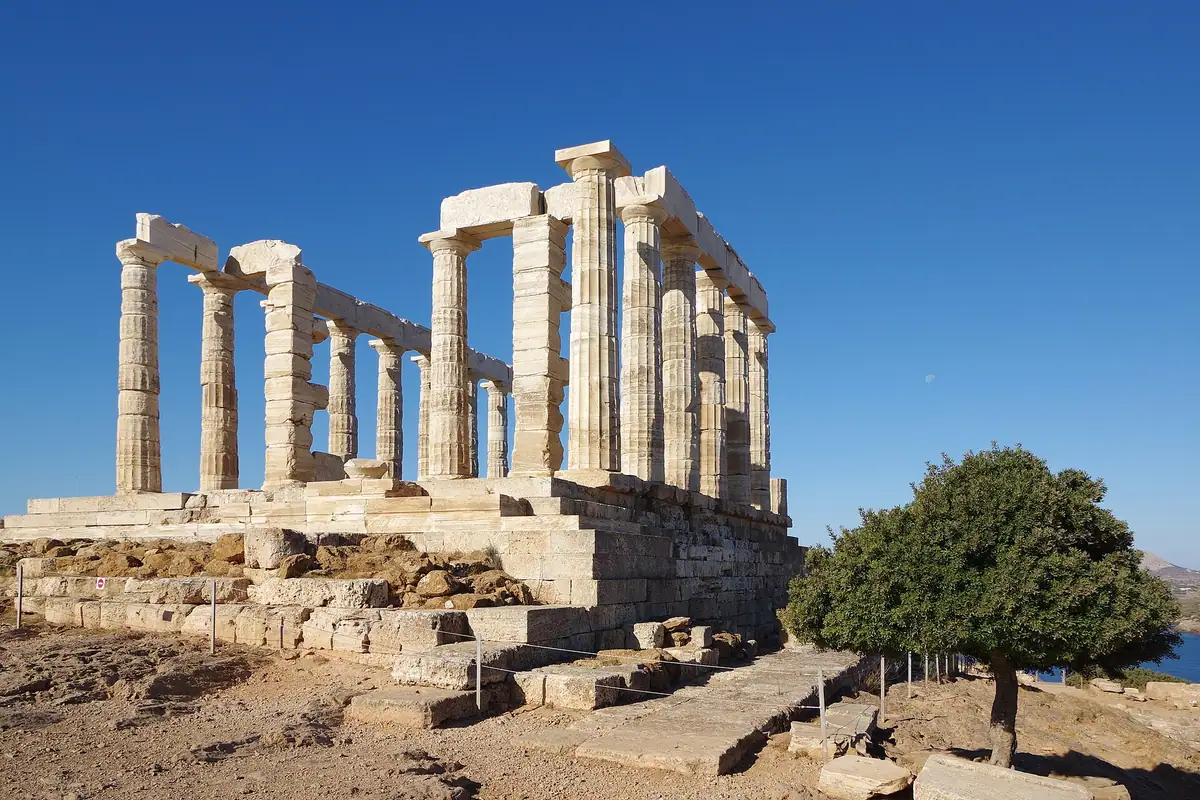
A Doric temple to Poseidon on a headland with the Aegean on three sides. It is the single best sunset in Attica and everyone knows it, which is the whole problem and also entirely beside the point — go anyway, and go late.
The drive down the coast road is half the reason to come. It runs past the beaches of the Athens Riviera, then climbs into scrubby hills that drop straight into the water. If you are driving, leave two and a half hours before sunset so you have time to stop.
- The temple itself, with columns thin enough to look fragile against the sky
- Lord Byron's name, carved into a column in 1810, now behind a rope
- The small bay below the site, empty most afternoons
Worth knowing. The last bus back leaves before the light goes in high summer. If you want the sunset, you want a car or an organised tour — several people a week discover this the hard way, after the sun has set.
2. Ancient Corinth and the Corinth Canal
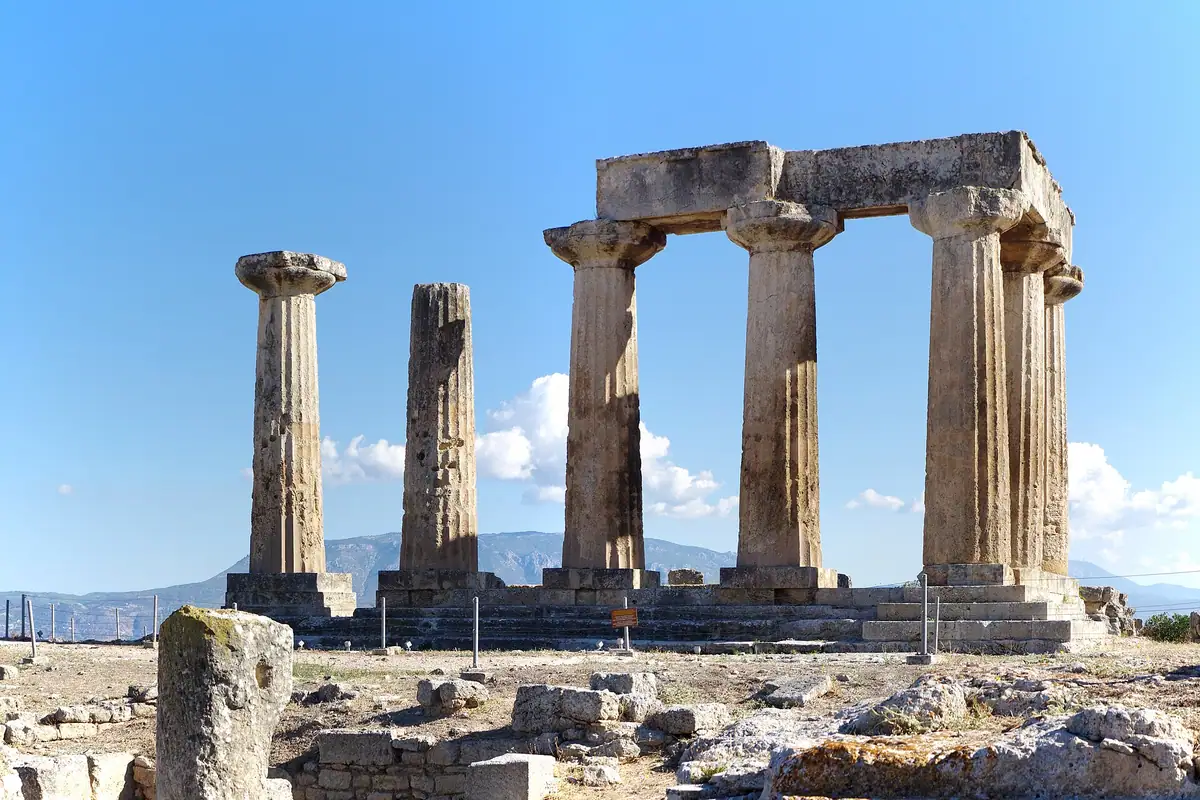
Two sights in one trip, and they could not be less alike. The canal is a four-mile slot cut through solid rock, twenty-one metres wide at the bottom, so narrow that ships are towed through it. You look down at it from a road bridge and it does not look real.
Ancient Corinth, twenty minutes further, is a proper Roman city: a paved forum, the Temple of Apollo still standing, the fountain of Peirene, and above it all the Acrocorinth, a fortress on a rock you can climb if you have the legs and the water.
- The canal, from the bridge at Isthmia
- The Temple of Apollo — seven columns, mid-sixth century BC
- The site museum, which is small and unusually well labelled
- Acrocorinth, another 3 km uphill and worth a taxi
Worth knowing. There is almost no shade anywhere on the Corinth site. In July and August, go at opening or after four.
3. Mycenae
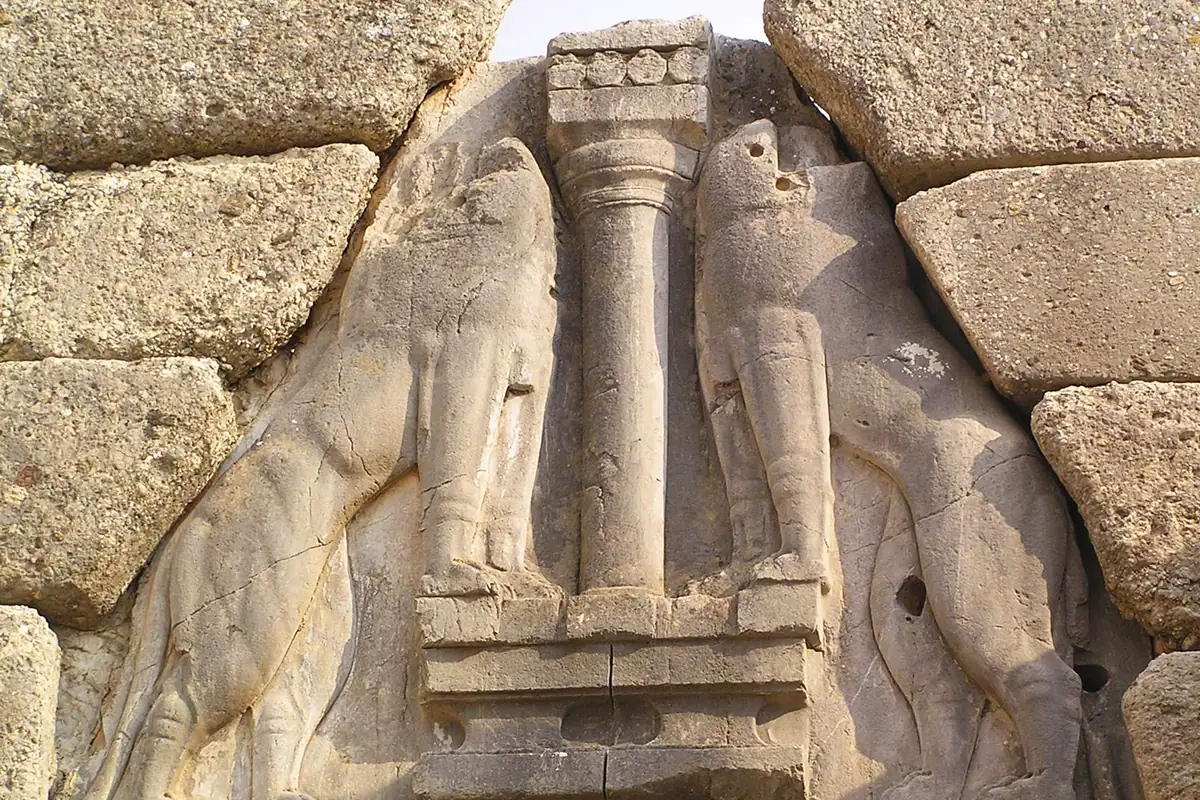
This is the oldest thing on the list by a long way — a citadel from the fourteenth century BC, five hundred years before classical Athens. Agamemnon's city, if you take Homer literally, and the archaeologists who dug it certainly did.
You walk in under the Lion Gate, which is exactly as it was when chariots went through it, and the scale is the surprise: the walls are made of blocks so large that later Greeks assumed giants had stacked them. Below the citadel, the Treasury of Atreus is a beehive tomb with a corbelled dome that held the record for the widest in the world for a thousand years.
- The Lion Gate — the oldest monumental sculpture in Europe
- The grave circle where Schliemann found the gold masks
- The Treasury of Atreus, a ten-minute walk down the road
- The view from the top, over the whole Argolid plain to the sea
Worth knowing. The site is a hillside of loose stone with no handrails. Trainers, not sandals.
4. Nafplio
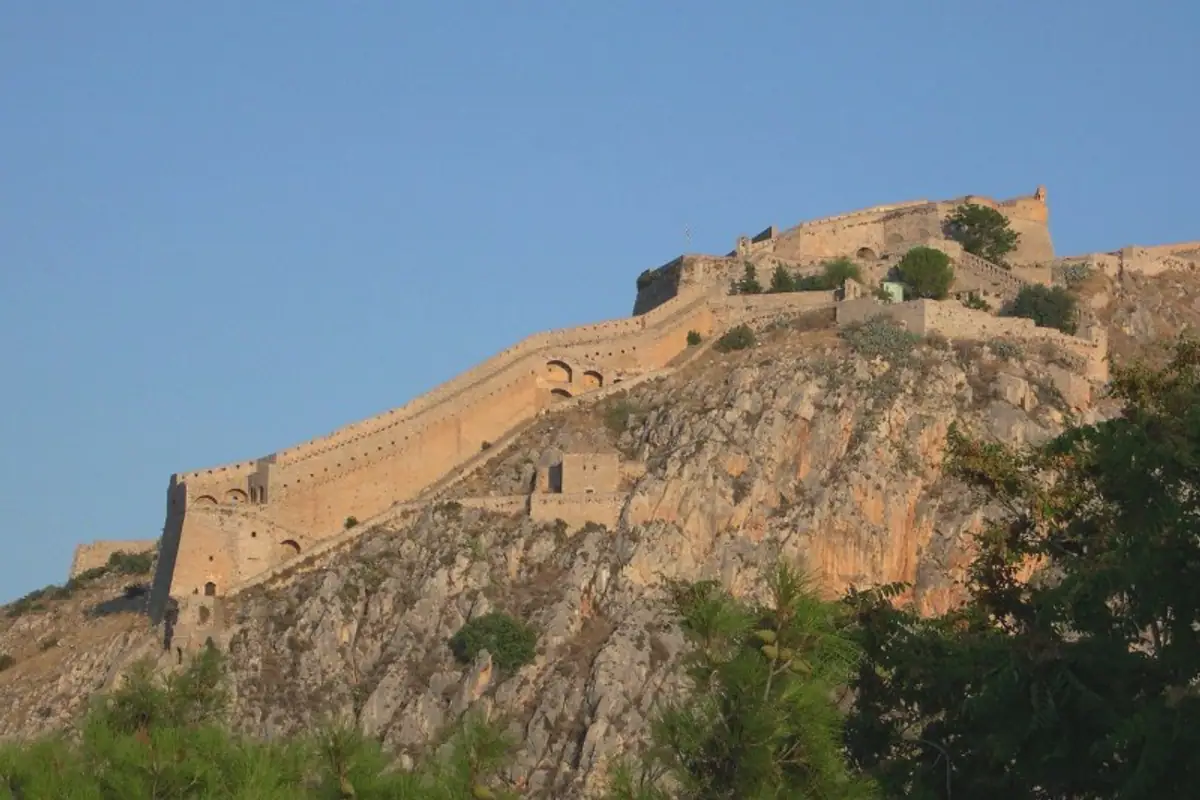
The first capital of independent Greece, and the one town on this list where the point is not a monument but the place itself. Venetian balconies, marble streets worn smooth, bougainvillea over everything, and a harbour with a small fortress sitting on an island in the middle of it.
Above the town, Palamidi fortress is reached by a staircase of — depending on who is counting — somewhere around nine hundred steps. There is also a road, and no shame in taking it.
- Syntagma Square and the old town lanes behind it
- Palamidi fortress, for the walls and the view down the gulf
- Bourtzi, the island fort, by small boat from the quay
- Arvanitia, a swimmable pebble beach ten minutes' walk from the square
Worth knowing. Nafplio pairs naturally with Mycenae and Epidaurus — all three are within forty minutes of each other. With a car it is one very full day; by bus, pick two.
5. Epidaurus
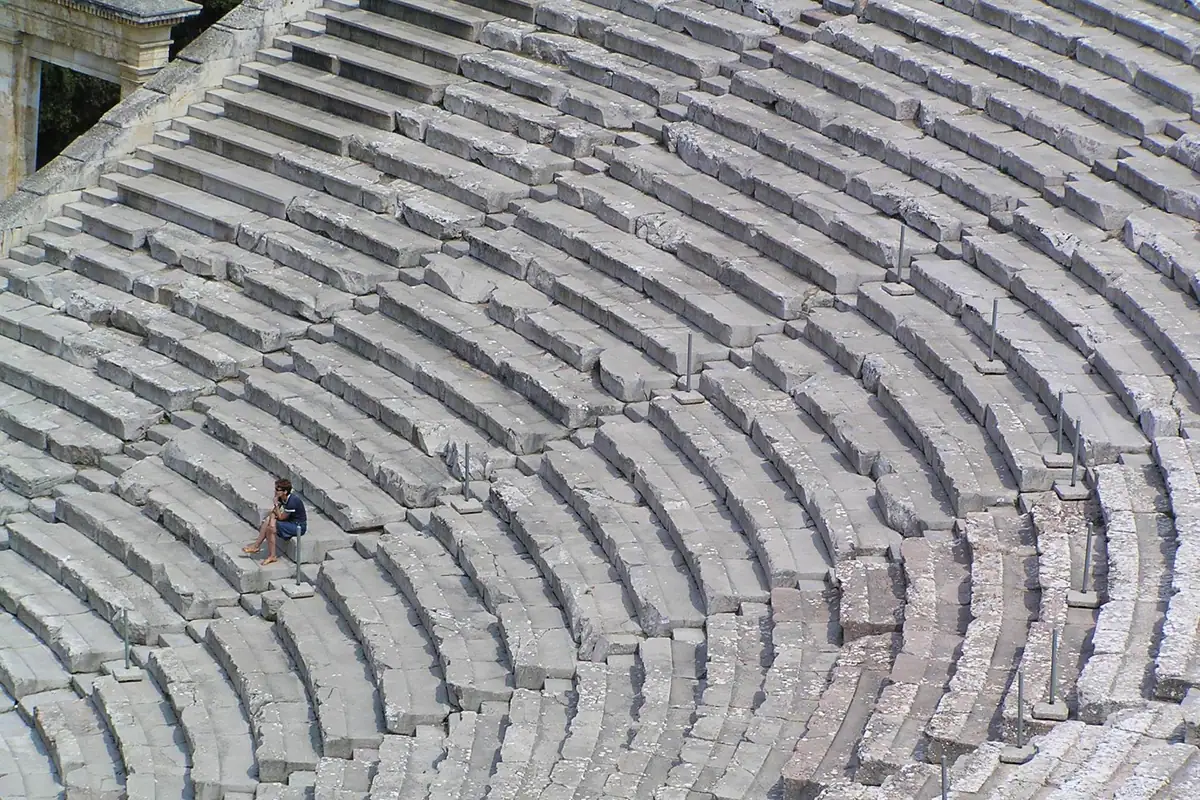
The theatre is the thing. Fourteen thousand seats cut into a hillside in the fourth century BC, and an acoustic so precise that a whisper from the circular floor carries to the last row. Everyone tests it. Stand at the top while someone else stands in the middle and drops a coin, and you will hear it.
The rest of the site is the sanctuary of Asclepius, which was a healing centre — part temple, part hospital, part spa. It is quieter than the theatre and gives you the context for it: people came here to be cured, and the drama was part of the treatment.
- The theatre, and the coin test
- The Tholos, a circular building nobody has fully explained
- The museum, with surgical instruments that are unnervingly familiar
Worth knowing. In July and August the Athens and Epidaurus Festival stages ancient drama here on weekend nights. Seeing a play in the theatre it was written for is a different experience from visiting it, and tickets go early.
6. Aegina
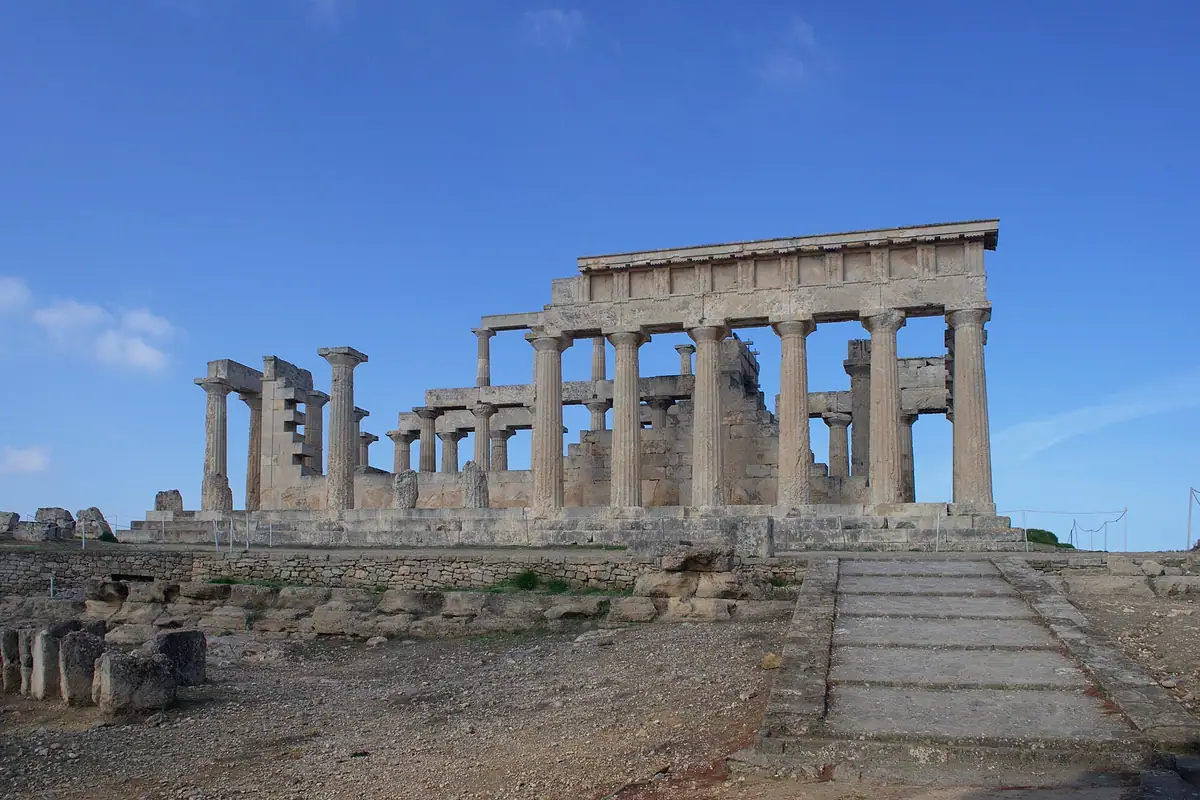
The closest island to Athens, and close enough that Athenians treat it as a suburb with a sea in between. It is not the prettiest island in Greece and does not pretend to be. What it is, is easy: you can decide over breakfast and be swimming by eleven.
The Temple of Aphaia, on a pine-covered hill in the north-east, is one of the best preserved in Greece and forms a near-perfect triangle with the Parthenon and Sounion — which the ancients may or may not have intended, and which guides will tell you either way with equal confidence.
- The Temple of Aphaia, about 25 pistachio-scented minutes from the port by bus
- Agia Marina for the beach, on the far side of the island
- The pistachios — Aegina's are protected by origin and genuinely different
- Perdika, a fishing village at the southern tip, for lunch
Worth knowing. Buses on the island connect to ferry arrivals, not to a regular clock. Photograph the timetable at the port before you go anywhere.
7. Hydra
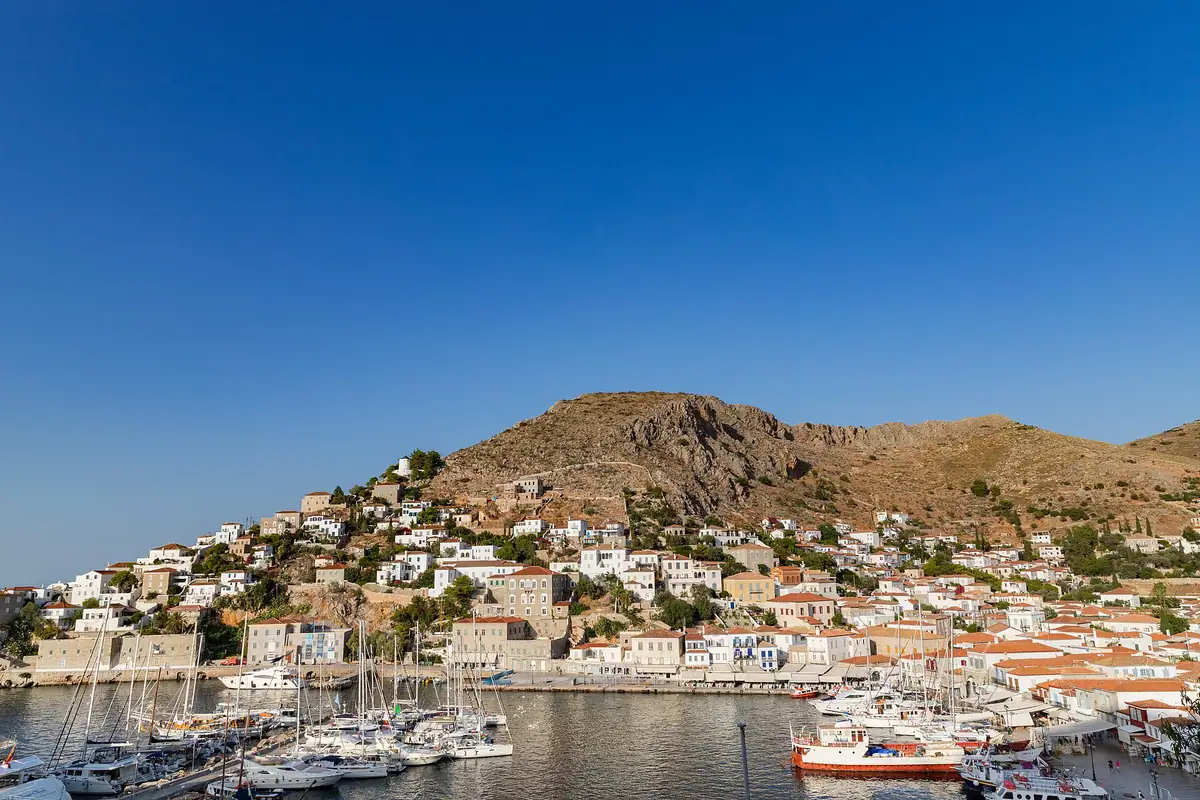
No cars. None — not taxis, not scooters, not delivery vans. Transport on Hydra is donkeys, boats and your own legs, and the effect on a town is immediate: you hear conversations, water, hooves on stone.
The harbour is an amphitheatre of grey stone mansions built by shipowners who grew rich running the Ottoman blockade. Behind them the island climbs fast, and twenty minutes of walking puts you above all of it with the Peloponnese across the water.
- The harbour front, best in the hour after the day boats leave
- The walk to Kamini and Vlychos — a coastal path, about forty minutes
- Hydronetta or Spilia for swimming off the rocks near town
- The Monastery of the Dormition, in the middle of the harbour front
Worth knowing. It is the most expensive stop on this list, and the day-trip window is short — roughly five hours ashore. If Hydra is the one you actually care about, an overnight changes it completely, because the island empties at six.
8. Eleusis (Elefsina)
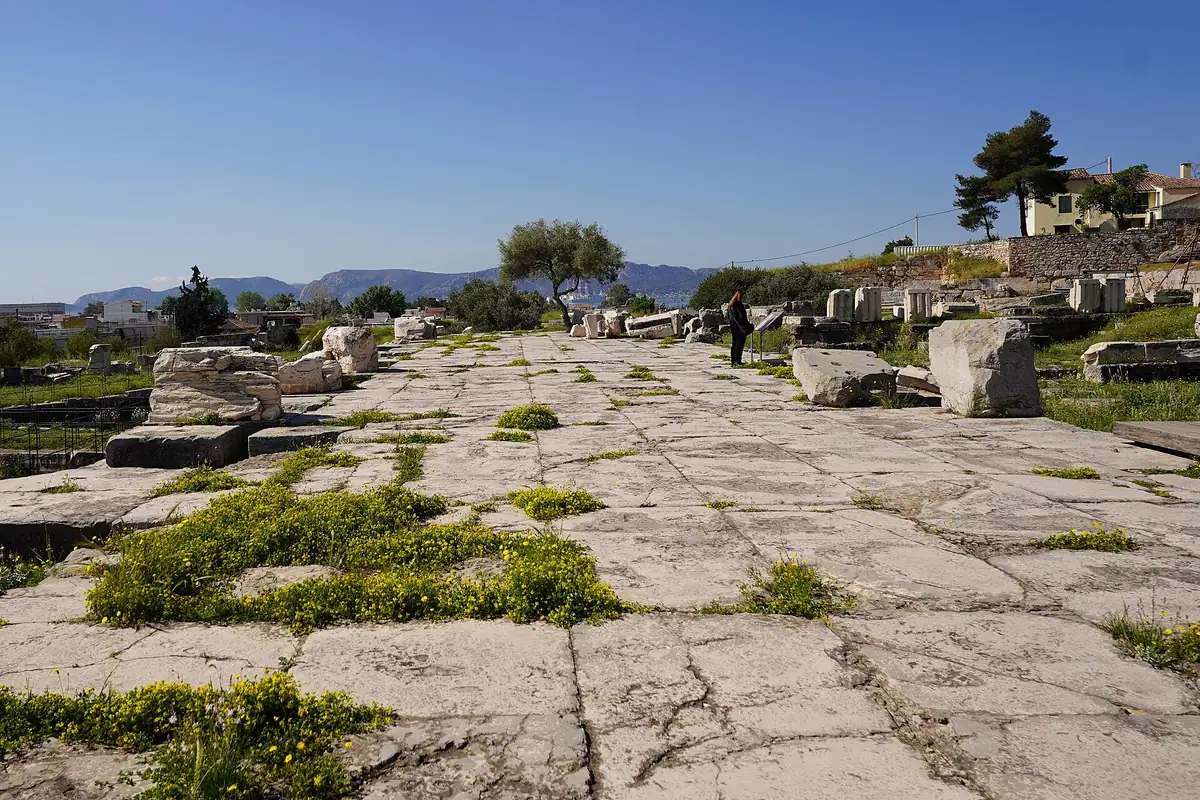
For two thousand years this was the most important religious site in the Greek world after Delphi, and we still do not know what happened here. The Eleusinian Mysteries were an initiation that thousands underwent and nobody described — the penalty for telling was death, and it appears to have worked.
What is left is a site most visitors skip, twenty minutes from Athens, sitting incongruously between an oil refinery and a working port. That contrast is the reason to come. It is the least touristed serious archaeology in Attica, and Elefsina was a European Capital of Culture in 2023, which left the town with more going on than it had before.
- The Telesterion, the hall where the initiation happened
- The Greater Propylaea, a Roman copy of the Acropolis gateway
- The site museum, up the hill, with the view over the bay
Worth knowing. This is the trip for a half-day you did not plan for — a morning when the weather turned, or an afternoon before an evening flight.
9. Lake Vouliagmeni and the Athens Riviera
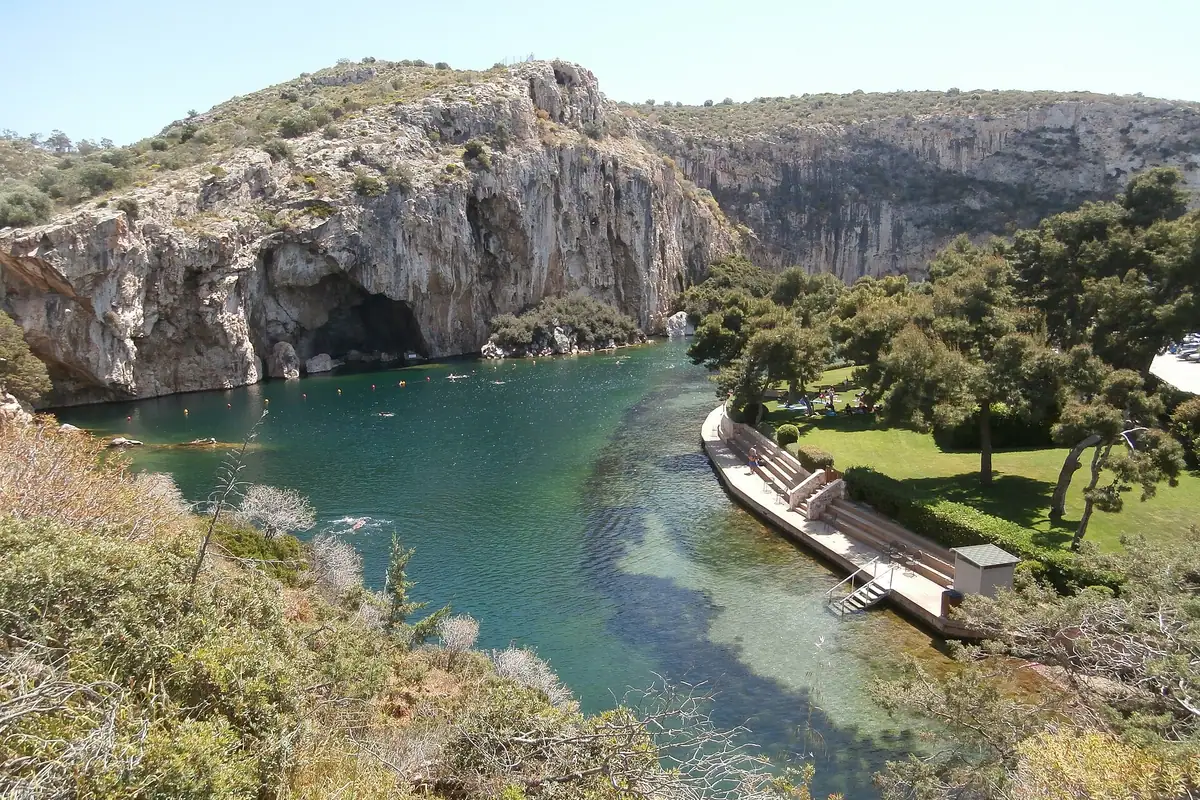
A collapsed cave that became a lake, fed by underground thermal springs, sitting a hundred metres from the sea at a steady 22–29 °C all year. You swim in brackish, slightly sulphurous water under a cliff, and small fish do a pedicure on your feet whether you asked or not.
The coast either side of it is the Athens Riviera: organised beaches, marinas, and the enormous Stavros Niarchos Foundation Cultural Center back towards the city, which is free and worth an hour on the roof.
- The lake itself — go early, it fills up by noon in summer
- Vouliagmeni and Varkiza beaches
- The coastal tram from Syntagma, which is slow and lovely
Worth knowing. The lake is a paid, organised facility with sunbeds and a restaurant, not a wild swimming spot. If that is not what you want, the free rocks just south of it are.
10. Marathon
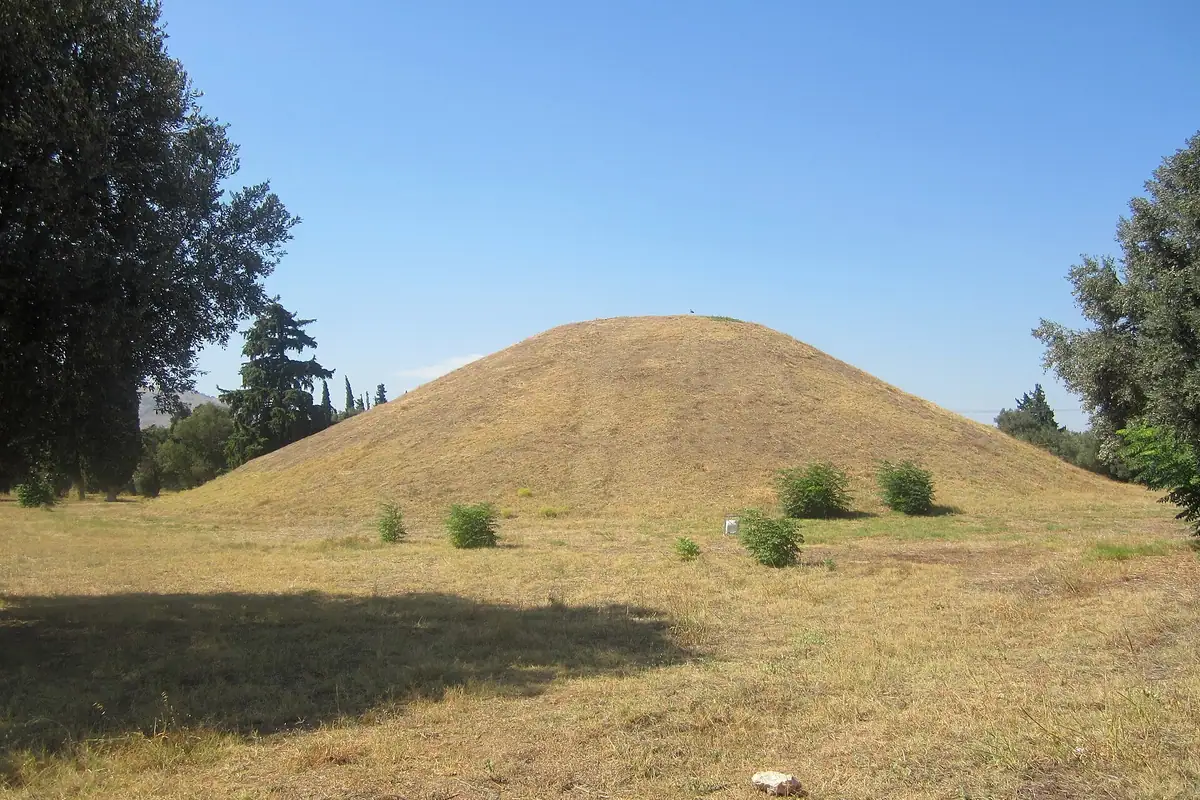
The distance is not a coincidence. In 490 BC an Athenian army beat a much larger Persian force on this plain, and the messenger who carried the news to Athens gave his name to every marathon since, then died of it.
The battlefield is farmland now, and the tomb of the Athenian dead is a grassy mound in a field — modest to the point of anticlimax unless you know what you are looking at. Which is rather the point: this is a place you come to stand in, not to photograph.
- The Tomb of the Athenians, 192 men under a single mound
- The archaeological museum at Vrana
- Schinias beach, pine-backed and long, ten minutes away
- Lake Marathon dam, an unexpected slab of white Pentelic marble
Worth knowing. Combine it with Schinias. The battlefield alone is an hour of quiet reflection; with the beach it is a proper day.
11. Delphi
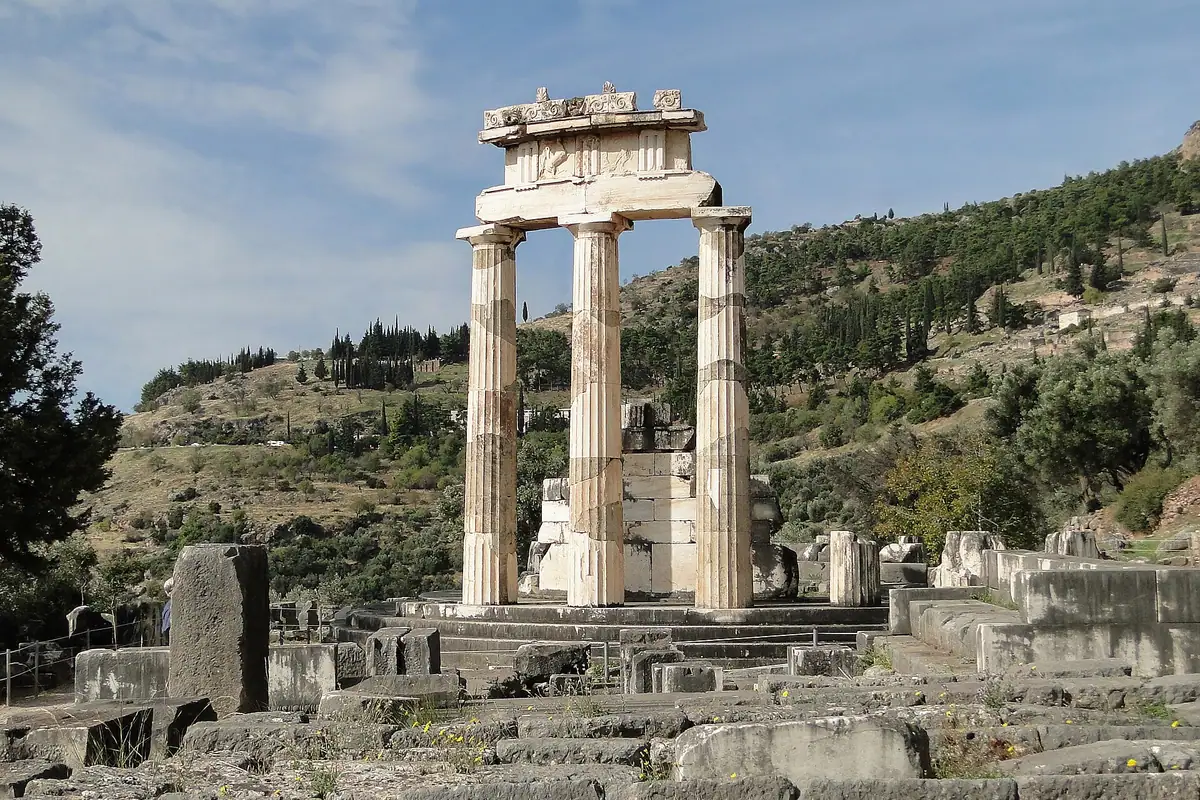
The Greeks thought this was the centre of the world and marked the spot with a stone. Standing on the terrace, on the side of Mount Parnassus with the olive groves running down to the gulf, it is not a difficult idea to entertain.
The Sacred Way climbs past the treasuries of the city-states — each one a small marble building put up to show off — to the Temple of Apollo, where the oracle gave answers ambiguous enough to be right either way. Above that, a theatre, and above that, a stadium at the top of the hill that almost nobody climbs to. Climb to it.
- The Treasury of the Athenians, reconstructed and complete
- The Temple of Apollo and the omphalos stone
- The stadium, the best-preserved in Greece, fifteen minutes up
- The museum, for the Charioteer — bronze, from 470 BC, with eyelashes
Worth knowing. This is a long day by bus: three hours each way and the return times are few. Leave on the first bus. If you can drive, it opens up Arachova and Osios Loukas on the way back.
12. Meteora
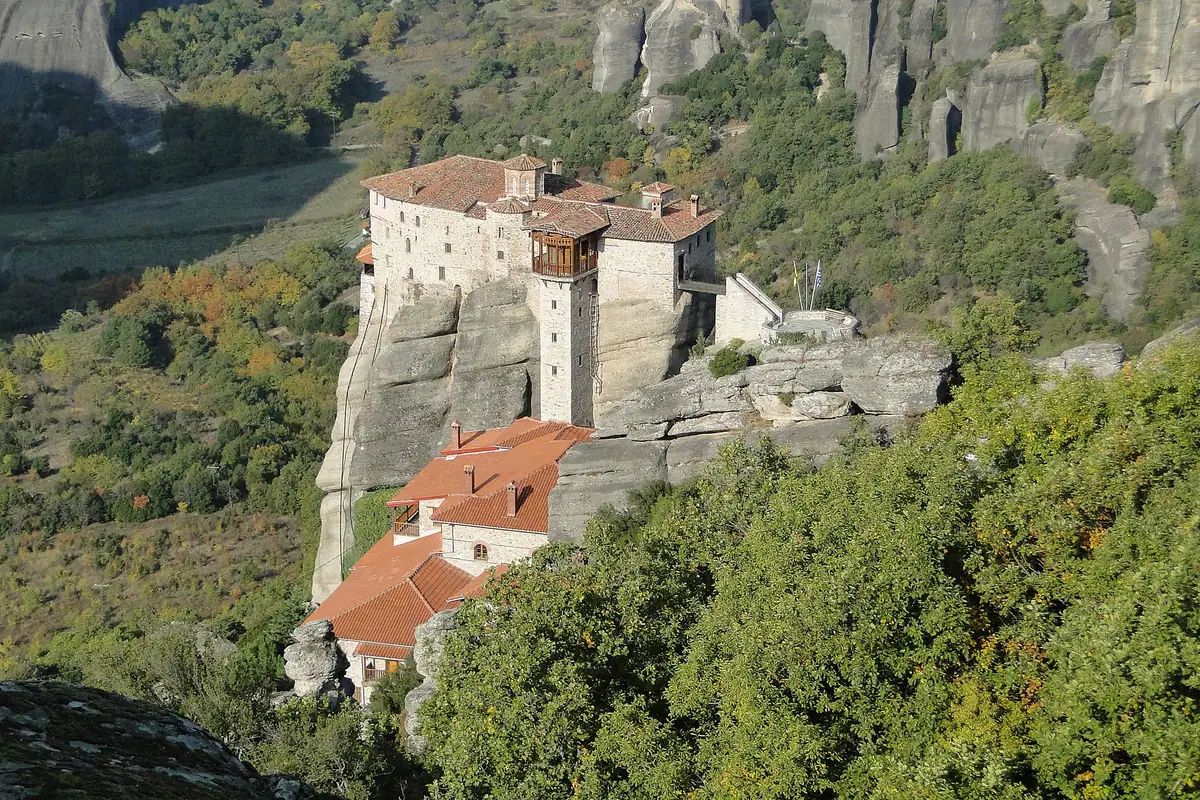
Six monasteries on top of sandstone pillars that rise three hundred metres straight out of the plain of Thessaly. Monks first climbed them in the fourteenth century to be unreachable, and until the 1920s the only way up to some of them was a net on a rope.
It is on this list with a warning attached: as a day trip from Athens it is nine hours of travel for four hours there. Doable, and people do it, and they spend the whole return journey wishing they had booked a room in Kalabaka. The train is comfortable and scenic and you will still be tired.
- Great Meteoron, the largest and oldest
- Varlaam, for the original winch tower
- Roussanou, the most photographed, on its own narrow pillar
- The sunset viewpoint above Kastraki, which costs nothing
Worth knowing. Each monastery closes on a different day of the week and the schedule changes with the season, so two of the six will be shut whenever you go. Check which before you plan the route, and dress for a religious site — covered shoulders, and skirts over the knee, which they will lend you at the door.
How to choose, if you only get one
A rough sorting, on the assumption that you have a single free day:
- If you want the photograph: Sounion at sunset, or Meteora if you will accept the travel.
- If you want to feel the age of the place: Mycenae. Nothing else on the list is close in years.
- If you are travelling with someone who does not like ruins: Nafplio, or Hydra.
- If it is August and forty degrees: Aegina or Vouliagmeni. Archaeology in that heat is endurance, not sightseeing.
- If you have a car and an early alarm: Mycenae, Epidaurus and Nafplio in one loop. It is the best day in this article.
Practical things worth doing before you go
Three that repeatedly catch people out, none of which cost anything.
- Check the last return, not the first departure. Nearly every problem on this list is a return-time problem. Greek intercity buses thin out sharply after six.
- Buy the combined ticket if there is one. Athens sells a five-day pass covering the Acropolis and six other central sites, which pays for itself if you visit three.
- Sort out data before you land. Bus timetables, ferry cancellations and monastery opening days all live online and all change. An EU SIM roams in Greece at no extra cost; everything else does not.
The best of these trips are the ones where you arrive early enough to be alone for the first hour.
Sounion at eight in the morning is a different temple from Sounion at six in the evening. So is Mycenae, so is Delphi, and so — for about forty minutes after the first ferry — is Hydra. None of it requires anything except being willing to get up.
Greece — our plans
6 plans · prepaid · activate any time within 12 months
| Plan | Valid | Price |
|---|---|---|
| 1 GB | 7 days | €1.25 |
| 3 GB | 30 days | €2.76 |
| 5 GBmost chosen | 30 days | €3.99 |
| 10 GB | 30 days | €6.72 |
| 20 GB | 30 days | €11.51 |
| 50 GB | 90 days | €27.18 |
Keep reading
Day trips from Rome: twelve that fit in a day
Day trips from Barcelona: twelve that beat another day in the city
eSIM for Croatia: what to know before you go
Get connected before your next trip.
Buy a plan, install it in one tap, and land online. Everything in one app.